Bleib in deinem Tempo
mypacing shows how much of your day sat above your strain limit. A self-observation tool. Not a diagnosis.


Why this matters
One day too much — and you pay for it for days.
People with Long COVID, ME/CFS, POTS and post-vaccination syndrome know the cycle of doing too much and crashing. Almost every app pushes you to do more. For these conditions that is exactly wrong. mypacing does the opposite: it helps you stay below your exertion limit and notice when too much is building up. It predicts nothing and diagnoses nothing. It shows you your own patterns.

Pacing means planning rest before your body forces it.
In three steps
Your analysis in three steps
Connect the app or log how you feel
Get the mypacing app and connect it to Apple Health or Health Connect — your values then sync automatically, no files needed. Or simply log each day how you are doing: it works without a watch too. If you prefer not to use the app, you can still upload export files.
How to get started with the app →Your patterns in plain words
How much of your day was above your pulse limit? For how long at a stretch? How do your resting heart rate and your heart rate variability (HRV) respond? Your check-in takes one tap a day. From that, mypacing gradually learns your personal early-warning pattern — one calm assessment per day.
View the app →Plan ahead
A calm heads-up when exertion builds up over several days. No alarm, no prediction. Plus a stand test for POTS and a doctor's report that only you create.
FAQ →
Your calendar, without the pressure
One tap is enough: how are you today? Over time this builds your personal pattern — at a glance. You can add forgotten days at any time. No day has to be complete.
The knowledge behind it
Built on current research
mypacing invents no numbers — it builds on recognised recommendations and stays honest about what data can (not yet) do.
Heart-rate pacing
In ME/CFS and Long COVID the exertion threshold is low. Too much time above it triggers a delayed PEM. As a rule of thumb: resting heart rate plus 15 beats, and ideally no more than two minutes above it at a stretch. Clinical guidelines explicitly do not recommend graded exercise programmes (GET). The number 15 is a rule of thumb, not a study finding — we went and checked, and we write down what we found.
Build-up, not prediction
Reliably predicting a crash the day before is not something the data supports. We say that openly. What is measurable is the build-up pattern: resting heart rate and HRV respond with a delay, usually 24 to 72 h later. Your own check-in gradually turns this into a personal early-warning pattern.
Stand test for POTS
POTS frequently accompanies these conditions. It cannot be read from a whole day of data. That is why there is a guided stand test (NASA lean test): ten minutes long, one pulse reading every minute. You can take the result to your doctor's appointment.
Pacing calculator
Quick orientation without an account: how much activity can your body handle? The pacing calculator uses your early-warning signs, your resting heart rate and the delay of your crashes. From that it suggests an exertion limit for the day. Free and without an account.
Pacing interval timer
Portion an everyday task into short bursts of activity and rest — for example "30 seconds of cleaning, 30 seconds of rest". Times are freely adjustable, with a sound and vibration signal at each switch. Runs entirely in your browser, no account, nothing leaves your device — usable independently of the app.
Pausing before it tips over
Early crash warning does not mean predicting what will happen. It means taking a break in time when exertion builds up. Before your body makes the decision for you.

Devices
Many sources — or none at all
If you have a watch or fitness band, the mypacing app picks up your values automatically via Apple Health or Health Connect — uploading files is mostly just the fallback. Exception: for Whoop, Apple Health on iPhone doesn't carry HRV yet (Whoop and Apple use technically different HRV formats) — the file upload is still worthwhile there; on Android, Health Connect picks up HRV automatically too. If you don't, how you feel plus the stand test are enough. Both are voluntary.
The most convenient way is the dedicated mypacing app for iPhone — with automatic data transfer via Apple HealthKit. The Android version is built and currently in closed testing; it syncs via Health Connect — install it directly.
Apple Health and Health Connect bundle Samsung, Huawei, Amazfit and many more. File upload remains the way for everyone without the app — one file, many devices. Direct account linking — mypacing fetching your daily values from the provider itself, without you downloading and uploading a file — does not exist for any provider yet. It is planned for Garmin, Fitbit/Google, Oura, Withings, Polar, Whoop, Suunto and COROS; there is no date for it.
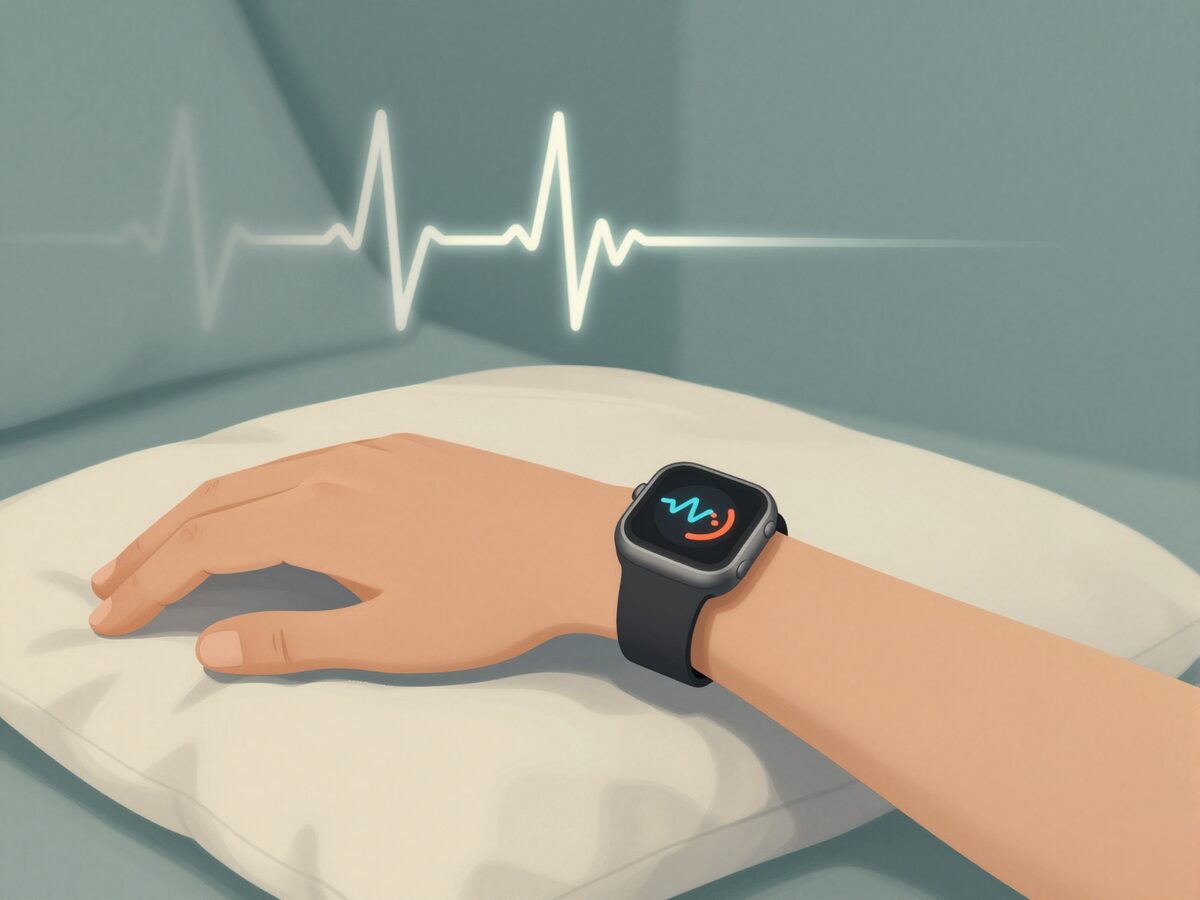
Runs quietly in the background
Once connected, mypacing fetches new values automatically from Health Connect or Apple Health. You no longer need to upload anything by hand. Your raw data stays on your device.
Privacy
Your health data belongs to you
Specially protected
Health data is especially sensitive under GDPR (Art. 9). mypacing processes it only with your explicit, voluntary consent — encrypted, pseudonymous and for a defined purpose. Analyses across several accounts are only ever pseudonymous and aggregated.
Deletable any time
You decide what gets stored. Everything can be deleted again with one click. We do not keep your uploaded files after the analysis.
Private & free
mypacing is a private passion project, free forever, funded at most by voluntary contributions. Your health data is never sold, never used for advertising, and never shared with insurers, employers or authorities.
You share when you choose
The doctor's report is only created when you generate it. Nothing is passed on to third parties automatically.
Bleib in deinem Tempo
Start small: log how you are today. Or upload your data. Free, voluntary and revocable at any time.
Start for free