Spoon theory: planning your energy.
One day, a handful of spoons: the image from “The Spoon Theory” makes it tangible that energy is limited and every activity uses some of it.
Where the image comes from
Spoon theory goes back to a 2003 essay by US writer Christine Miserandino. She wanted to explain to a friend what her everyday life felt like and picked up spoons from the table: each spoon stands for part of the day’s energy, and every activity costs one or more (Christine Miserandino: The Spoon Theory, accessed 31.10.2026). Since then many people use the image to help others understand why they plan their day carefully.
The principle in three sentences
- The supply is limited. A day starts with a certain number of spoons.
- Everything costs. Showering, phone calls or a trip count too, not just exercise or work.
- Planning means choosing. Knowing how many spoons there are lets you decide what they should cover.
Example: a day in spoons
An invented day with twelve spoons. The values are examples; what something costs differs from person to person.
| Activity | Spoons |
|---|---|
| Getting up, showering, dressing | 2 |
| Focused work in the morning | 4 |
| Shopping | 2 |
| Cooking dinner | 2 |
| Total | 10 of 12 |
With two spoons left, there is room for a phone call or a break. A spontaneous appointment would have to replace something else.
Spoons and energy points in mypacing
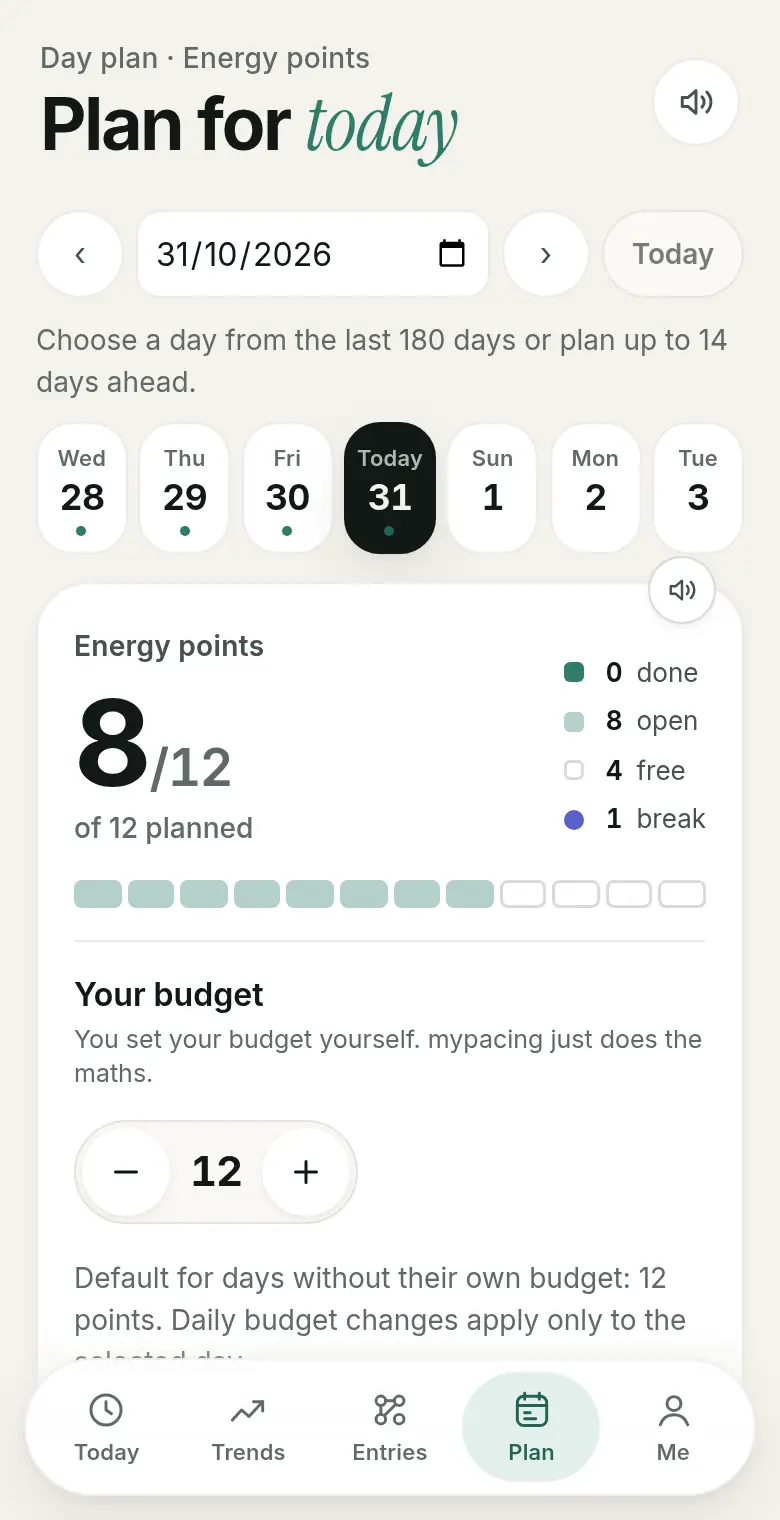
The mypacing day plan uses a similar image: activities get energy points by effort, and you set a daily budget. The app shows how much is planned and how much is still free. Breaks such as the rest moment do not count towards the budget. mypacing does not suggest a budget or rate your plan.
What the image does – and what it does not
Spoon theory is an explanatory image, not a measurement method. It helps you talk about daily energy and organise your own day. It says nothing about health or capacity; neither do energy points in mypacing.
Frequently asked questions
What is spoon theory?
An image for limited daily energy: every activity costs spoons, and the supply is limited. Christine Miserandino described it in 2003 in her essay “The Spoon Theory”.
What does “spoonie” mean?
Some people who describe their daily energy with the spoon image call themselves that. The term comes from online communities around the essay.
Are energy points in mypacing the same as spoons?
The idea is similar: activities get points by effort, and you set a daily budget. mypacing only does the maths and does not suggest a budget.
How many spoons does a day have?
There is no fixed number. How much you plan for a day is up to you; it can differ from day to day.
Is mypacing a medical device?
No. mypacing is a diary and planning tool. It makes no diagnoses, gives no recommendations and does not replace medical advice.
Read more
Energy points
Plan your day with your own energy budget.
Energy management instead of time management
Organise your day by energy, not just the clock.
Pacing in daily life
Spread exertion and recovery across the day and week.
See mypacing: The demo shows the daily picture, history and day plan with made-up values – no account needed. More on the home page.
mypacing is not a medical device. The app shows your own values and notes over time. It does not make diagnoses, give treatment recommendations or replace medical advice.
The app is free on the App Store for iPhone and iPad and on Google Play for Android.
Publisher: SIGAtech Softwareentwicklung, responsible for content: Siegfried Gaier (legal notice). Last updated on 31 October 2026.