PEM Crash: What Helps Right Now — Acute First Aid for Post-Exertional Malaise
When a crash is starting or already here, every minute counts. Concrete, source-based first steps for Long COVID, ME/CFS and POTS.
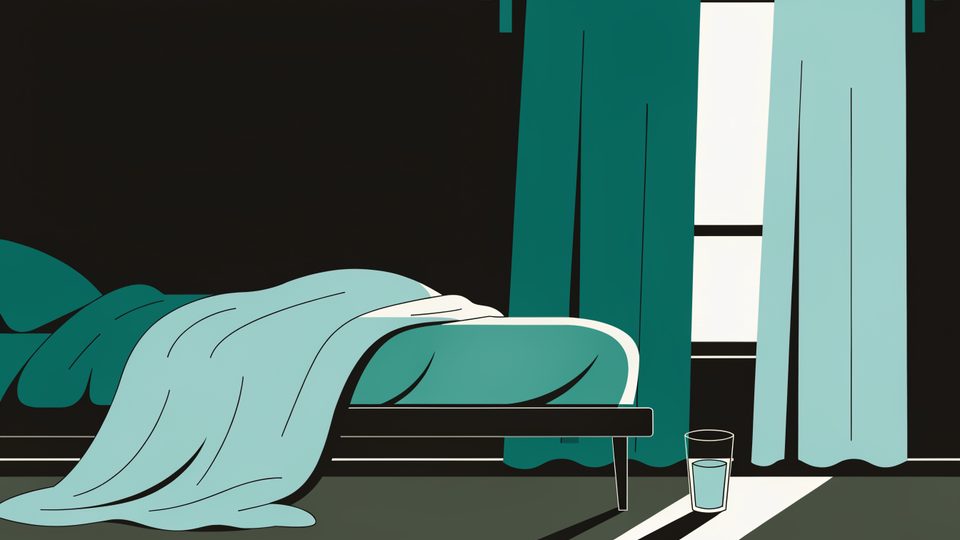
A PEM crash (post-exertional malaise) often feels sudden and overwhelming: exhaustion, pain, brain fog, sometimes flu-like symptoms — usually 12 to 72 hours after an activity that felt manageable at the time. This article does not replace medical advice; it summarizes what established guides (including the Bateman Horne Center, the CDC and Solve M.E.) recommend as an immediate response.
The first few minutes: stop the activity now
The most important step is also the hardest: stop. Any further activity — even something that seems minor, like tidying up or a phone call — typically prolongs and worsens the crash. "Pushing through" or "just finishing it" is almost always the wrong strategy with PEM.
- Lie down, don't just sit down. A horizontal position takes pressure off circulation — especially important if POTS or other orthostatic symptoms are also present.
- Reduce stimulation. Dim the lights, turn off screens, avoid noise. Sensory overload often makes PEM symptoms worse.
- Regulate temperature. Many people report that cooling down (a cool cloth on the neck, a cooler room) helps ease heat intolerance and a racing heart.
Fluids, salt and electrolytes
For accompanying orthostatic intolerance (common with POTS), guidelines mention increased fluid and salt intake, provided there's no medical contraindication (e.g. high blood pressure, kidney disease — check with a doctor if unsure). Electrolyte drinks or a pinch of salt in water can help stabilize blood volume.
What does NOT help right now
- Gentle "activation" or light movement to "get going". Unlike ordinary fatigue, movement during PEM often measurably worsens symptoms (see the Workwell Foundation's two-day exercise testing).
- Caffeine or stimulants as a quick fix. They mask fatigue signals in the short term but delay real recovery.
- Blaming yourself. A crash is not a character flaw — it's a physiological response to overexertion.
Document symptoms — but not during the acute phase
Once the situation allows it, a short note is worthwhile: what came before the exertion? How many hours until the crash set in? Which symptoms, how severe? mypacing offers a simple crash diary within the daily tracking view — pattern analysis across several crashes often reveals more than remembering a single incident.
Open the crash diary — daily tracking viewWhen medical help is needed
Most PEM crashes are distressing but not acutely dangerous. Medical evaluation is advisable or necessary for: persistent chest pain, shortness of breath at rest, fainting or near-fainting (syncope), new neurological symptoms, confusion beyond the familiar "brain fog", or symptoms that are clearly different from previous crashes. If in doubt, call your local emergency number.
Afterwards: slowly and carefully back to baseline
A crash doesn't end abruptly. Rebuilding activity should start well below the level that triggered the crash — with pacing, not "catching up". The pacing calculator can help find a realistic daily exertion limit for the period after a crash. If you suspect POTS symptoms, the guided stand test is a tool for getting a structured finding for your next doctor's visit.
Open the pacing calculator — exertion limit after a crash Start the stand test — if you suspect POTS symptomsNote: This article does not replace medical diagnosis or treatment and is not emergency guidance. For acute or worsening symptoms, contact medical professionals. In an emergency, call your local emergency number.
Sources
- ME/CFS Crash Survival Guide — Bateman Horne Center
- Managing Post-Exertional Malaise (PEM) in ME/CFS — U.S. CDC
- Post-Exertional Malaise Avoidance Toolkit — Solve M.E.
After a crash, the hardest part is actually keeping the breaks. mypacing reads the values from your wearable and puts exertion, sleep and how you feel side by side, so you can see how long recovery really took this time.
Open the interval timer — alternate activity and rest, no account needed Create an account — free for good, no adsmypacing is also available for your phone. How to set up the Android version is described on the Android page.

How this article came about: the text was drafted by an AI system (an Anthropic model with web search); the sources are real references found while writing, not invented addresses. A person read it and released it before publication. We say this under Art. 50 of the EU AI Act — and because it seems right to say it. More under Legal, Section 4e.